
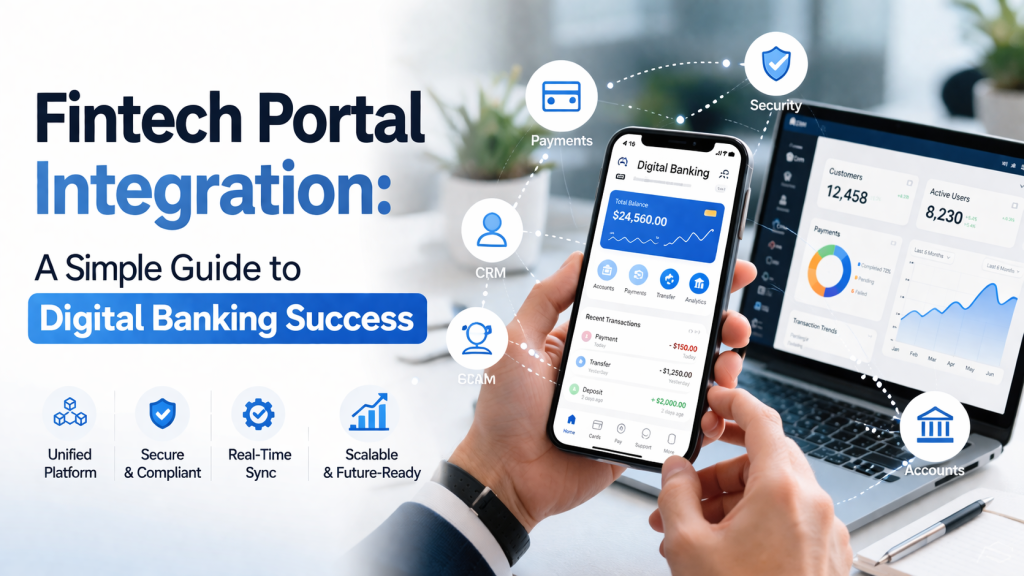
A Quick Overview :
In an era where digital banking is no longer optional, fintech portal integration has become the key to delivering fast, secure, and personalized financial services. From connecting CRM systems and payment engines to managing accounts and analytics seamlessly, integrated portals are transforming how banks, neobanks, and fintech startups operate.
This guide reveals how to build a high-performing digital banking platform, the benefits of integration, the challenges to watch out for, and the future trends shaping the fintech landscape — giving you the insights you need to stay ahead of the competition.
Introduction :
In today’s fast-paced financial ecosystem, digital transformation isn’t optional — it’s essential. Financial institutions, neobanks, and fintech startups are racing to deliver platforms that are secure, seamless, and user-centric. Central to this transformation is fintech portal integration, the process of connecting CRM systems, payment engines, account management tools, analytics, and core banking platforms into a unified digital banking platform.
This guide explores everything you need to know about fintech portal integration, from strategic benefits and core components to best practices, security considerations, and future trends. Whether you’re a fintech founder, CTO, or part of a fintech app development company, this blog provides actionable insights to design and implement a high-performing portal.
Why Fintech Portal Integration Matters
In fragmented fintech ecosystems, disconnected systems like CRM, payment processing, loan origination, and reporting dashboards often result in data silos, slow processes, inconsistent experiences, and higher operational costs. Simply adding new tools won’t solve the problem; the solution lies in a fully integrated portal where systems communicate in real time, creating a unified digital banking platform.
Fintech portal integration ensures that customer data flows securely across systems, reduces manual errors, enhances automation, and enables teams to act on insights faster. For end users, this means faster onboarding, smoother transactions, and more personalized services. Strategically, integration allows organizations to deliver competitive differentiation through efficiency, innovation, and superior customer experience.
What Is a Digital Banking Platform?
A digital banking platform is a unified interface — web or mobile — that allows users to manage financial activities digitally. Modern platforms go beyond traditional online banking by being API-driven, modular, and scalable.
Key components include:
- CRM systems for customer management
- Payments and accounts integration
- Loan and investment management modules
- Analytics and reporting dashboards
- Security and compliance layers
The goal is to offer a frictionless, omnichannel experience, enabling customers to access all financial services from a single interface. A unified platform also empowers internal teams to make data-driven decisions and streamline operations.
Core Components of a Modern Fintech Portal
A successful fintech portal integrates several key systems, each serving a critical function:
Fintech CRM Integration
CRM is no longer just a data repository; it drives engagement and personalization. Fully integrated fintech CRM integration enables platforms to:
- Track customer interactions across channels
- Personalize product offerings based on behavior
- Automate communications and notifications
- Increase customer retention through targeted campaigns
Integration with payments and account systems gives teams 360° visibility into customer activity, enhancing decision-making and service quality.
Payments and Accounts Integration
Seamless payments and accounts integration is critical for real-time financial operations. Features include:
- Linking multiple payment gateways
- Instant balance and ledger updates
- Automated settlements and reconciliation
- Support for various payment methods, including bank transfers, cards, and digital wallets
Without integration, payment processing becomes prone to delays and errors, undermining trust and user satisfaction.
Analytics and Reporting
Integrated analytics provide insights across customer behavior, transaction trends, and operational efficiency. By combining data from CRM, payments, accounts, and third-party sources, dashboards allow leadership to monitor performance in real time and make strategic, informed decisions.
Automation Workflows
Automation reduces manual intervention and accelerates processes. Key examples include:
- KYC and identity verification
- Fraud detection
- Loan eligibility checks
- Billing and invoicing
Automation enhances operational efficiency, reduces costs, and improves the overall user experience.
Benefits of Integrated Fintech Platforms
Proper fintech portal development offers benefits across multiple dimensions:
- Faster Time to Market: New features can be deployed quickly since they plug into existing systems.
- Lower Operational Costs: Integration reduces manual workflows and human errors.
- Improved Customer Retention: Seamless services keep users engaged and satisfied.
- Data-Driven Insights: Unified data streams enable informed business strategy and forecasting.
Key Challenges in Fintech Portal Development
Even with benefits, integration has its challenges:
- Legacy System Compatibility: Older systems may lack APIs, requiring middleware or custom solutions.
- Data Standardization: Different platforms may use varying data formats, requiring harmonization.
- Security and Compliance: Integrated systems increase the attack surface, necessitating robust secure fintech portal features.
- Third-Party Dependencies: Managing multiple vendors (CRM, payments, analytics) can add complexity.
These hurdles often lead fintech companies to partner with experienced fintech app development services providers to ensure smooth integration.
Best Practices for Fintech Portal Integration
1. Adopt API-First Architecture
Design each system — CRM, payments, accounts, and analytics — to communicate via APIs. This approach ensures smooth integration, faster deployment of new features, and scalability as your fintech portal grows. It also allows third-party apps or services to connect seamlessly without disrupting existing workflows.
2. Prioritize Data Governance
Establish clear rules for data ownership, formatting, validation, and storage. This ensures that information is consistent, accurate, and compliant with regulations like PCI DSS and GDPR. Good data governance also enables better reporting, smarter decision-making, and a reliable experience for both users and internal teams.
3. Modular Design
Break the portal into independent modules — for example, CRM, payments, account management, and reporting. This allows teams to develop, update, or scale individual modules without affecting the whole system, making the portal more flexible, maintainable, and resilient to changes.
4. Implement Real-Time Synchronization
Ensure that any action in one system — like a payment, account update, or CRM record change — updates instantly across all modules. Real-time synchronization improves accuracy, speeds up customer support, and delivers a seamless, trustworthy experience for users.
5. Invest in Monitoring and Alerts
Use monitoring tools to continuously track system performance, data flow, and transactions. Set up alerts for issues such as failed payments, API delays, or downtime. This proactive approach minimizes disruptions, reduces operational risks, and ensures your fintech portal remains reliable and secure.
Architecture Considerations
A modern fintech portal performs best with a microservices architecture, where key components — CRM, payments, accounts, and analytics — operate independently yet communicate seamlessly via APIs. This approach ensures flexibility, scalability, and resilience, allowing your platform to adapt as user needs and technology evolve.
Key elements to consider:
- API Gateways: Secure and manage access between modules.
- Event-Driven Messaging: Enables real-time updates across systems.
- Containers and Orchestration: Supports scalability and fault tolerance.
Building such a platform requires careful planning and technical expertise. For a deeper understanding of how to design, develop, and deploy scalable fintech apps, check out our Custom Mobile App Development Company: Cost, Process & Strategy Guide (2026).
Secure Fintech Portal Features
Security is non-negotiable. Integrated portals must include secure fintech portal features, such as:
- Multi-Factor Authentication (MFA): Adds a layer of protection against unauthorized access.
- Encryption: Both in transit and at rest, protecting sensitive data.
- Role-Based Access Control (RBAC): Limits access based on responsibilities.
- Real-Time Threat Detection: AI-driven monitoring identifies anomalies promptly.
Compliance with standards like PCI DSS, GDPR, and regional financial regulations builds trust and reduces legal risks.
Enhancing Customer Experience Through Integration
Integrated portals provide superior experiences:
- Unified dashboards for accounts, payments, and transactions
- Faster support with full visibility of user activity
- Personalized recommendations and financial insights
A cohesive portal transforms digital banking into an efficient, enjoyable, and engaging experience, increasing loyalty and adoption.
Use Cases and Real-World Examples
- Neobank Launch: A fintech startup used fintech portal integration to connect CRM, KYC, payments, and accounts, launching a fully compliant app in months.
- SME Payment Portal: An enterprise integrated payment and account systems with analytics dashboards, reducing reconciliation efforts by 70% while providing real-time insights to customers.
These examples illustrate how fintech portal development translates directly into measurable business outcomes.
Future Trends in Fintech Portal Development
The fintech landscape is evolving rapidly. Key trends include:
- Embedded Finance: Financial services, such as Buy Now Pay Later (BNPL) and digital wallets, are increasingly integrated into non-financial apps.
- AI-Driven Personalization: Platforms leverage AI to dynamically adapt to user behavior, providing tailored recommendations and smarter financial insights.
- Open Banking & API Ecosystems: Standardized APIs allow greater interoperability between financial services, enabling seamless data sharing and integrated experiences.
- Platform Leadership: Firms that successfully implement integrated fintech portals are better positioned to innovate and lead in the competitive digital banking space.
Ready to Transform Your Digital Banking Experience?
If you’re looking to build a secure, seamless, and scalable digital banking platform, expert guidance is crucial. Partner with a trusted fintech app development company to implement fintech portal integration, CRM solutions, and payments and accounts integration that drive efficiency, customer satisfaction, and growth.
Get in touch today to take your fintech platform to the next level with professional fintech app development services and solutions tailored to your business needs.
Conclusion
Fintech portal integration is not just a technical implementation — it’s a strategic advantage. From fintech CRM integration and payments and accounts integration to implementing secure fintech portal features, integration enables efficiency, scalability, and superior customer experiences. Modern digital banking platforms require careful planning, robust architecture, and ongoing governance.
Partnering with a trusted fintech app development company or leveraging professional fintech app development services ensures your platform is built to deliver results. Investing in proper fintech portal development today will position your organization to thrive in tomorrow’s competitive financial ecosystem.
