
Advertising on ChatGPT is no longer a hypothetical. OpenAI has started exploring ad-supported models and sponsored content within conversational AI. For performance marketers who built careers on Google and Meta, this is a new channel with unfamiliar rules.
The marketers who figure it out first will own the early advantage. This post covers what we know, what it means, and how to prepare.
What Most Marketers Get Wrong About Conversational Ad Formats
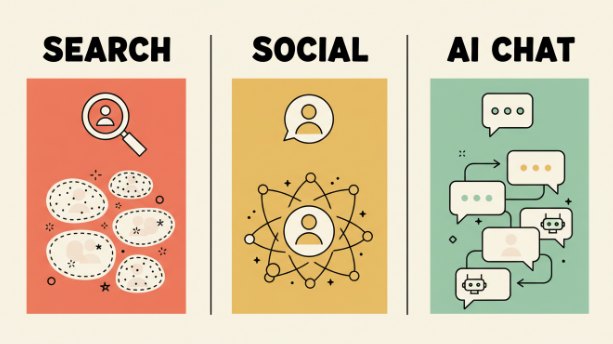
Search ads work because users signal intent with keywords. Social ads work because platforms track behavior and interests. Conversational AI does not fit neatly into either model. Marketers who try to force existing frameworks onto chatgpt advertising will waste budget.
The interaction is fundamentally different. Users ask questions in natural language. They expect direct answers, not a list of links. Ads that interrupt that flow will get ignored or actively resented.
Treating conversational AI like another search engine is the fastest way to burn your budget on a channel you do not understand.
OpenAI advertising is still in its early stages. The format, targeting, and auction mechanics are evolving. Marketers who wait for a mature playbook will enter late. Those who experiment now will shape how the channel develops.
What Effective Conversational Advertising Requires
Context-Aware Placement
Ads in conversational AI must match the context of the conversation. A user asking about project management tools should see relevant software recommendations, not unrelated display ads. AI-native optimization means the ad system reads conversational context and serves content that feels like a natural extension of the answer.
Value-First Creative
Interruptive ads fail in conversational interfaces. The creative must add value to the conversation. Think product recommendations that solve the problem being discussed, not banner ads wedged between paragraphs. Agencies skilled in chatgpt advertising are already testing creative formats that educate rather than interrupt.
Multi-Platform Integration
ChatGPT ads will not exist in isolation. Performance marketers need to integrate conversational ad data with existing Google, Meta, and LinkedIn campaigns. Attribution must span all channels. Budget allocation must account for this new surface alongside established ones.
Real-Time Performance Measurement
New channels need new metrics. Click-through rate may not be the primary KPI for conversational ads. Engagement depth, recommendation acceptance rate, and downstream conversion attribution will matter more. Data-driven decisions require instrumentation from day one.

Practical Steps to Prepare for Conversational Advertising
Monitor OpenAI’s ad product announcements closely. The format is evolving. Beta access and early partnerships will go to marketers who are paying attention and ready to act. Subscribe to official channels and industry analysis.
Audit your content for conversational readiness. Chatgpt advertising rewards content that answers questions directly. Review your landing pages, product descriptions, and help content. Rewrite anything that reads like marketing copy instead of a clear, useful answer.
Build your first-party data foundation. Conversational ad targeting will rely heavily on first-party data as privacy restrictions tighten. Clean your CRM. Implement server-side tracking. Ensure your conversion data is accurate and comprehensive.
Test AI-generated ad creative now. The creative skills for conversational ads are different from display or search. Start testing AI-generated copy, product descriptions, and recommendation-style content on existing channels. The teams working with chatgpt advertising specialists are already building these creative muscles.
Allocate experimental budget. Set aside 5-10% of your paid media budget for channel experiments. When conversational ad inventory becomes available, you need budget ready to deploy immediately. First movers will benefit from lower competition and cheaper inventory.
The Window for Early Advantage Is Closing
Every new advertising channel follows the same pattern. Early entrants get cheap inventory and outsized returns. The middle wave gets acceptable results at market rates. Latecomers pay premium prices for declining performance.
Google Ads was cheap in 2005. Facebook Ads were a bargain in 2013. Both are now expensive, competitive, and increasingly difficult to differentiate on. Conversational AI advertising is at the beginning of that curve right now.

Performance marketers who dismiss this channel as too early are making the same mistake their predecessors made with programmatic, social, and mobile. The channel is real. The inventory is coming. The question is whether you are positioned to capture value when it arrives.
Waiting for case studies and best practices means arriving after the early advantage window closes. The marketers who test, learn, and iterate now will be the ones writing those case studies.
