
In today’s competitive business environment, managing employee attendance accurately is more important than ever. Whether you run a small office, a retail store, a warehouse, or a growing enterprise, reliable employee time clocks can simplify workforce management while reducing administrative work.
Traditional paper timesheets and manual attendance registers often lead to errors, misplaced records, and payroll discrepancies. Modern time clock systems provide a more efficient solution by recording employee work hours automatically, improving accuracy, and helping businesses stay organized.
Why Employee Time Clocks Matter
Employee time clocks are designed to record when employees start and finish their shifts. Many modern systems also monitor break times, overtime, and overall working hours. By automating attendance tracking, businesses can reduce mistakes and ensure employees are paid correctly.
Accurate time records benefit both employers and employees. Managers gain better visibility into workforce attendance, while employees have confidence that their working hours are being recorded fairly.
Key Benefits of Employee Time Clocks
Improved Accuracy
Manual attendance tracking often results in calculation errors or forgotten entries. Digital time clocks automatically record timestamps, eliminating much of the human error associated with paper records.
Simplified Payroll Processing
Payroll becomes easier when attendance data is automatically collected. HR teams spend less time calculating hours, overtime, and leave balances, allowing payroll to be completed more efficiently.
Better Workforce Accountability
When employees clock in and out using a dedicated system, attendance records become transparent. This helps create a culture of responsibility while reducing confusion over working hours.
Time Savings for Managers
Instead of reviewing handwritten timesheets, supervisors can quickly access attendance reports and identify scheduling issues or staffing shortages.
Improved Compliance
Many industries must maintain accurate employee attendance records to comply with labor regulations. Time clock systems help businesses keep organized records that are easier to retrieve during audits or inspections.
Different Types of Employee Time Clocks
Businesses have several attendance tracking options available depending on their operational needs.
Biometric Time Clocks
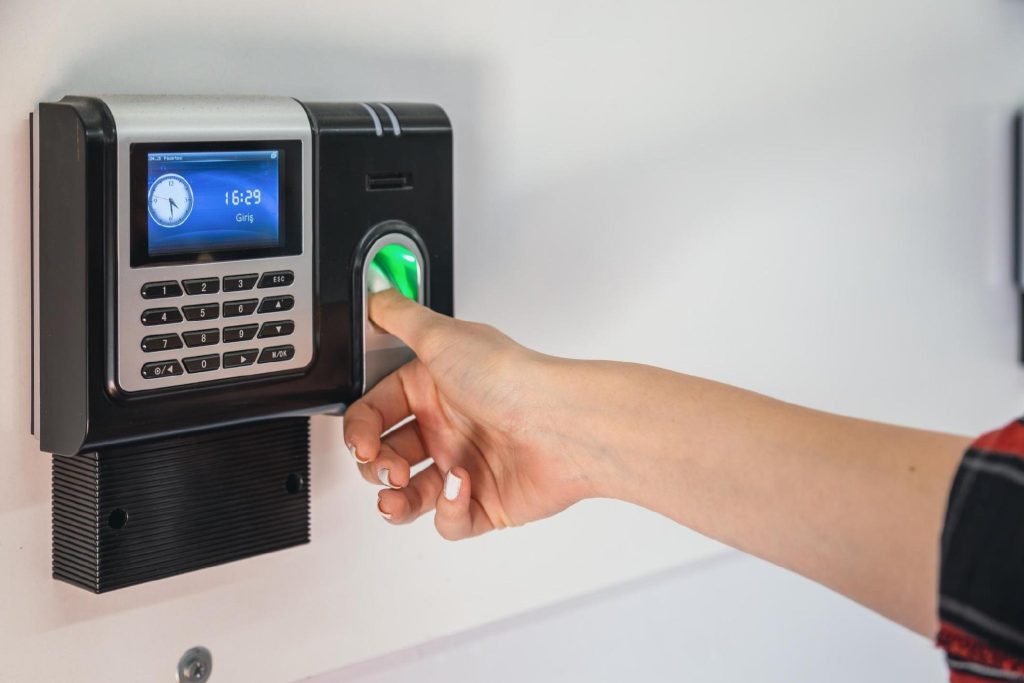
Biometric systems verify employee identity using fingerprints, facial recognition, or palm scans. These systems help prevent buddy punching, where one employee clocks in for another.
RFID Card Systems
Employees simply tap an RFID card or key fob when arriving or leaving work. These systems are fast, convenient, and suitable for offices and commercial workplaces.
PIN-Based Attendance Systems
Employees enter a personal identification number to record attendance. These systems are cost-effective but may not provide the same level of security as biometric solutions.
Mobile Time Tracking
For remote workers and field employees, mobile attendance apps allow clock-ins using smartphones. Many solutions include GPS verification for additional accuracy.
Cloud-Based Time Clocks
Cloud systems store attendance data online, allowing managers to review reports from virtually anywhere. This flexibility is especially valuable for businesses operating across multiple locations.
Features to Look For
Choosing the right employee time clock involves more than simply recording attendance. Modern systems often include valuable features such as:
- Real-time attendance monitoring
- Overtime calculations
- Shift scheduling
- Break tracking
- Leave management
- Payroll software integration
- Cloud reporting
- Employee self-service portals
- Multi-location support
- Mobile accessibility
Selecting features that match your business operations ensures you receive the greatest value from your investment.
Industries That Benefit Most
Employee time clocks are useful across many industries, including:
- Offices and corporate workplaces
- Manufacturing facilities
- Warehouses
- Retail stores
- Healthcare organizations
- Educational institutions
- Hospitality businesses
- Construction companies
- Logistics providers
- Government departments
Regardless of company size, accurate attendance tracking helps improve operational efficiency.
Reducing Time Theft
Time theft remains a common workplace challenge. Employees arriving late, leaving early, or asking coworkers to clock in on their behalf can increase labor costs over time.
Modern biometric systems significantly reduce these risks by confirming employee identity before recording attendance. This creates more reliable records while helping businesses control unnecessary payroll expenses.
Supporting Remote and Hybrid Work
Today’s workforce is increasingly flexible. Many organizations now manage remote, hybrid, or mobile employees who work outside traditional office environments.
Cloud-based employee time clocks enable staff to record attendance securely from approved locations. Managers can monitor attendance, generate reports, and review work hours without requiring employees to be physically present at the office.
This flexibility supports modern work environments while maintaining accurate attendance records.
Easy Reporting and Data Insights
Attendance data can reveal valuable workforce trends. Managers can review reports to identify:
- Frequent absenteeism
- Overtime patterns
- Late arrivals
- Staffing requirements
- Productivity trends
These insights help organizations make better scheduling decisions and allocate resources more effectively.
Choosing the Right Employee Time Clock
Before selecting a system, businesses should evaluate several factors:
- Number of employees
- Number of office locations
- Remote workforce requirements
- Budget
- Payroll integration needs
- Security requirements
- Future business growth
A scalable solution allows businesses to expand without replacing their attendance system later.
Final Thoughts
Employee time clocks have become an essential tool for modern workforce management. By automating attendance tracking, businesses improve payroll accuracy, reduce administrative work, strengthen accountability, and gain valuable operational insights.
Whether using biometric scanners, RFID cards, mobile applications, or cloud-based platforms, the right attendance system can simplify daily operations while supporting long-term business growth. Investing in a reliable employee time clock is not just about recording work hours—it is about creating a more organized, efficient, and productive workplace.

