
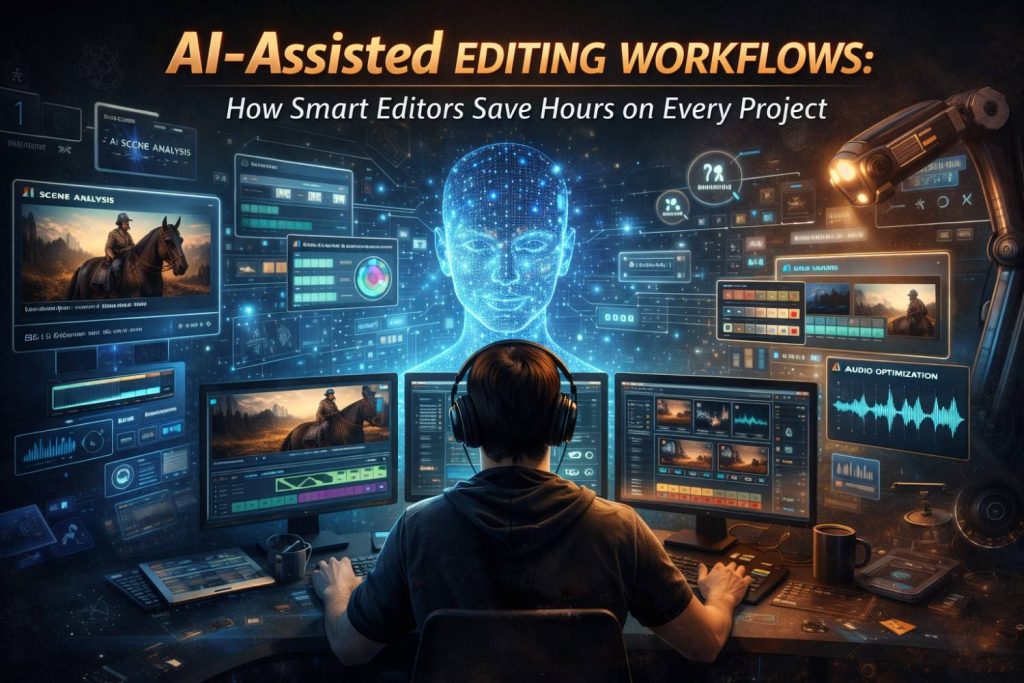
Often you will find videos in your home that may look the same, but one is remembered and the other just ends up being forgotten. This always comes down to the editing that has happened after the video capture. Creators today have the ability to produce content quickly, with gamers streaming their daily highlights and brands creating short advertising campaigns every week or students creating portfolios before graduating. Because of this ever-growing fast-paced environment, editors need not only to be creative, but also to operate at a speed that will allow them to maintain or even improve upon the quality of the content. This shift in workflow is what has changed the game for editors who now utilize artificial intelligence to support their editing workflows.
Several years ago editing was an all-night process of selecting and cutting the captured media. Today, thanks to modern technology, smart editors are able to spend less time searching through captured media and more time building their stories. The goal of AI-enhanced editing isn’t to replace or reduce the creative contributions of an editor, rather it represents an additional tool that eliminates repetitive tasks so editors can have an opportunity to create freely as an artist.
Why Editing Workflows Are Changing Faster Than Ever
Anyone you meet in a classroom for modern-day computers or Video Editing class will generally have one perspective they all agree on – it is just as important for your skills to be efficient as it is for them to be creative. Clients want projects delivered faster, gamers want to upload their videos on the same day and marketing campaigns are completely dependent on timing. An entire 2-day period of missing a trend will result in content being irrelevant.
Today AI tools can help to automatically organize footage, automatically detect silence in interviews and even suggest edits to your project! In some instances, just syncing audio alone could take hours to complete for organizers working with Gaming recordings or multi-camera footage. Now through smart tagging and auto-sorting, editors can save themselves an entire afternoon.
What many beginners do not realize about editing is that the creation of a content video does not come just from using the right software! The video editor’s creativity contributes significantly to determining speed, emotion, and flow when constructing videos.
From Gaming Clips to Brand Campaigns: Saving Time Where It Matters
The evolution of workflow can best be shown with gaming video creators. They would have to record four hours of gameplay for just 10 seconds of action. In the ‘old days’ an editor would watch the entire 4 hours again until they found the highlights. Now, they have scene detection and highlight detection that enhances this process.
The same type of evolution has also occurred with digital marketing video creation. A brand executing an SMO campaign will need several types of videos from one source — vertical reels, square video ads, and longer YouTube videos. Instead of starting with a new project file each time, the editor can now reuse timelines, autofit video dimensions based on the new format they are creating, and use AI to provide suggestions for where to place captions.
However, it does not mean that an editor is now less likely to make good quality editorial choices, in fact, workflows that use technology to be more efficient require better decision-making. So time has been saved so you can focus on creating content with more of your creative energy.
The Smart Editor’s Workflow: Small Changes That Save Big Hours
A professional workflow has nothing to do with fancy shortcuts, it’s all about consistency. Many students who take computer courses think that professional editors use the same method for every project. As such, here are some of the common habits seen among smart editors today, such as:
- Auto-organizing first – After importing footage into a project, editors will allow the software to tag speakers and locations (even when shooting video game footage) before touching any part of the timeline. Searching for footage after it has been imported can waste time and energy.
- Rough cut prior to effects – Most beginners will put transitions on their projects early on, whereas smart editors do not apply any transitions until after they’ve completed their rough cut. They complete their rough cut first before applying effects to the video.
- Create templates – Digital marketing videos often follow a template format due to the need for social media platforms to have specific format requirements. Using reusable templates for video will save you hours working on a project every week.
- Batch processing – For processes such as color correction or audio cleanup or any other repetitive processes on multiple clips, making changes to one clip means you no longer have to make the same changes to all the other clips.
Regardless of whether it was applied digitally or with actual transfers, expertise would always suggest the final edit be made by the editor without any outside influence from an artificial intelligence program.
By developing these simple habits collectively, an additional 6 hours were cut from the time taken to edit a 10-hour project.
How Learning Editing Skills Helps Beyond Just Videos
Video editing seems to primarily belong to filmmakers and YouTubers however, this isn’t true today. Visual communication is increasingly important for companies and freelance workers who are looking to establish a personal brand, as well as for small businesses looking to advertise their products through short video clips.
Individuals coming out of computer-related programs may never have seen that there are different avenues they can pursue utilizing their video editing skills, such as managing social media optimization pages, working with digital marketing companies, or producing promotional clips for companies. The knowledge of editing will help develop the bridge skills that connect the creative person with the potential for income.
Having an understanding of basic software workflows will help improve teamwork amongst designers, marketers and editors can all collaborate more easily on projects because everyone will understand the needs of each group in terms of timeline, file format, and export specifications.
AI Isn’t Replacing Editors — It’s Changing Their Role
The fear of automation entering into creative industries is always present, but what editing has revealed is actually a fascinating revelation As technology continues to simplify the technical side of production, the value placed on creative thought will continue to increase.
Clients do not recall what software was utilized to complete the project; they recall the emotion the video generated. A person has the ability to deliver perfect timing with a joke, create suspense within a video gaming montage, and connect music with emotive context, all of which are dependent on human intuition.
The use of AI has also been beneficial by eliminating the frustration that editors used to experience when they spent many hours removing noise from the background and renaming files, it enables editors to place their focus back on storytelling, which is the end result that the audience recognizes most.
Final Thoughts
The top editors of today do not work long hours, rather, they work with purpose. Today’s editors are creating workflows that incorporate organizational skills from attending computer classes, staying aware of the latest trends in digital marketing, and working on SMO (Social Media Optimization) because of these three things.
Using AI to assist with the editing process does not create short cuts, it creates a way for authors to create freely, it allows editors to meet time constraints without the use of time constraints and it allows the editor to create more work than they could if there was a lot of repetitive work involved in editing content. The loss of repetitive tasks within editing content means the author has more time to be imaginative and spend time creating an awesome, memorable video.
