
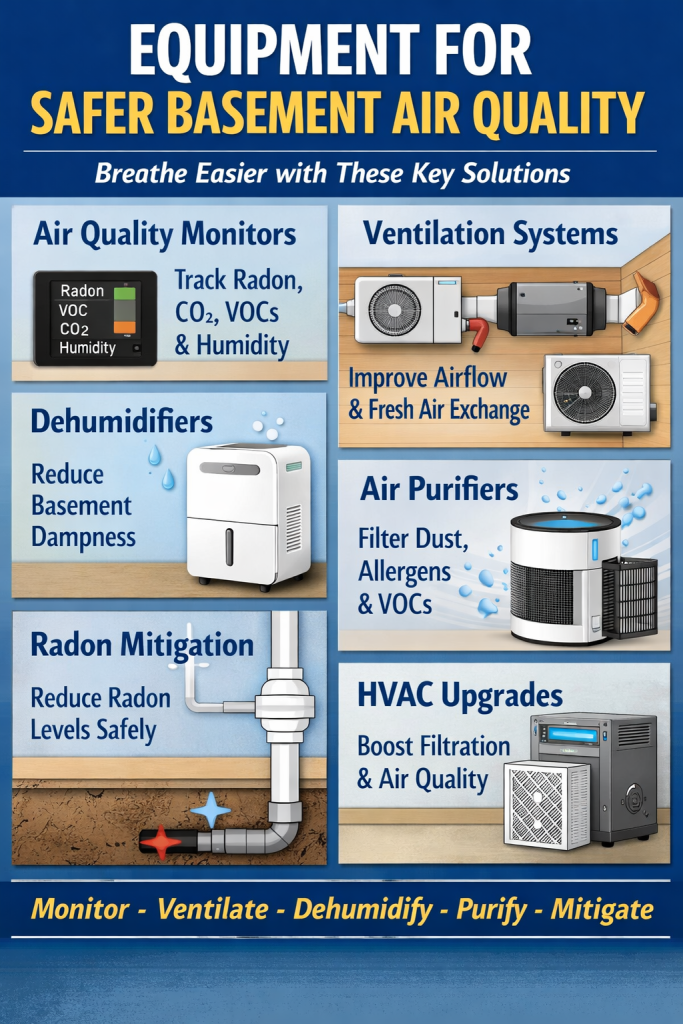
Basement air quality has a direct impact on the health and comfort of household members, and addressing it requires a combination of effective equipment and monitoring practices. Air in basements often contains higher levels of moisture, allergens, dust, and potentially dangerous gases such as radon. Installing radon mitigation products not only reduces the risk of prolonged exposure to harmful radiation but also improves overall basement safety. Homeowners often underestimate the cumulative effect of poor air circulation, moisture buildup, and unchecked contaminants, which can result in respiratory issues, allergies, and structural damage. Evaluating the correct tools for detection, filtration, and ventilation provides both immediate and long-term protection against indoor air hazards.
Air Quality Monitors and Sensors
Air quality monitors provide continuous assessment of indoor conditions and alert homeowners to potential hazards. Selecting the right monitor requires consideration of the types of pollutants it detects, such as particulate matter, carbon monoxide, radon, and humidity. Bullet points:
- Types of air quality monitors include digital, smart, and multi-sensor devices designed to provide real-time readings.
- Key features to consider are alert systems, data accuracy, connectivity with apps, and compatibility with home automation systems.
- Optimal placement is crucial; monitors perform best when positioned away from vents, walls, and corners to measure representative air quality levels.
Regular monitoring allows homeowners to make informed decisions about ventilation, filtration, and the use of radon mitigation products, ensuring a consistently safer environment in the basement.
Ventilation Systems for Basements
Proper ventilation prevents stagnation, reduces moisture buildup, and limits the accumulation of airborne contaminants. Bullet points:
- Common ventilation systems include exhaust fans, heat recovery ventilators (HRVs), and energy recovery ventilators (ERVs) tailored to basement spaces.
- Mechanical ventilation is more effective than natural ventilation in controlling airflow and maintaining balanced humidity levels.
- Maintaining continuous airflow through vents and ducts minimizes pockets of trapped pollutants and supports other air quality equipment.
A well-designed ventilation system works in conjunction with monitoring devices, filtration units, and dehumidifiers to create a healthier basement environment, reducing risks associated with dampness and airborne particles.
Dehumidifiers and Moisture Control
Excessive humidity in basements promotes mold growth, dust mites, and microbial development, which can compromise air quality. Dehumidifiers extract moisture from the air, lowering relative humidity to safe levels. Portable units provide flexibility and can target specific areas, while whole-home systems integrate with existing HVAC infrastructure to maintain consistent moisture control. Choosing the appropriate dehumidifier depends on basement size, average humidity, and expected seasonal fluctuations. Regularly emptying water reservoirs and cleaning filters ensures sustained performance, while moisture sensors can automate operation. Combined with proper insulation and sealing techniques, dehumidifiers create an environment that minimizes health risks associated with damp air.
Air Purifiers and Filtration Units
Air purifiers remove particles, allergens, and volatile organic compounds (VOCs) from basement air, improving respiratory safety. HEPA filters capture fine particulate matter, while activated carbon filters target odors and chemical pollutants. UV-C light technology can neutralize bacteria and viruses in the air stream. Selecting the right purifier requires consideration of the basement’s square footage, airflow patterns, and the type of contaminants present. Placement near sources of dust or dampness ensures maximum efficiency. Maintaining filter replacement schedules and cleaning units periodically supports consistent performance. Using air purifiers alongside ventilation and dehumidification creates a comprehensive system that addresses multiple air quality challenges simultaneously.
Radon Mitigation Equipment
Radon gas is a naturally occurring radioactive gas that poses serious health risks if accumulated in enclosed spaces. Radon mitigation systems, such as sub-slab depressurization units, vent pipes, and active extraction fans, significantly reduce indoor radon levels. Professional installation is recommended to ensure effectiveness and compliance with safety standards. Regular radon testing is essential to confirm that the system continues to function properly. Proper sealing of cracks in the basement floor and walls complements the performance of mitigation systems. Integrating radon reduction measures with air monitoring and filtration equipment guarantees that basement air remains within safe exposure limits.
HVAC Maintenance and Duct Cleaning
A properly maintained HVAC system ensures consistent circulation of clean air throughout the home, including the basement. Air filters should be selected based on their capacity to trap dust, allergens, and other particles without restricting airflow. Regular filter replacement and annual duct inspections prevent the accumulation of mold, pollen, and debris. Sealed and insulated ducts maintain temperature control and reduce the potential for condensation, which can exacerbate moisture problems. Periodic system cleaning and professional maintenance extend the life of HVAC equipment and support safer indoor air conditions.
Protective Measures for Household Items
Storing household items in ways that reduce exposure to humidity and contaminants contributes to overall basement air quality. Using vapor barriers on floors and walls, installing insulation resistant to moisture, and sealing storage containers prevent mold growth and minimize dust accumulation. Maintaining organized storage areas ensures that airflow is not obstructed and reduces the potential for hidden damp spots. These protective measures complement mechanical and electronic air quality solutions, providing a complete strategy for maintaining a safe basement environment.
Conclusion
Maintaining safer basement air quality requires a combination of monitoring, ventilation, filtration, moisture control, and radon mitigation equipment. Each component plays a critical role in reducing airborne hazards, controlling humidity, and preventing the buildup of dangerous gases and allergens. Regular maintenance and professional assessments ensure that each system functions efficiently, while proper placement and integration maximize their effectiveness. Implementing a layered approach, including air quality monitors, dehumidifiers, air purifiers, ventilation systems, radon mitigation products, and protective storage measures, creates a healthier, safer environment for occupants. Consistent attention to these strategies safeguards both the health of residents and the structural integrity of the basement over time.
FAQs
What are the most effective radon mitigation products for basements?
Radon mitigation products such as sub-slab depressurization systems, vent pipes, and extraction fans effectively reduce radon levels when professionally installed and combined with proper sealing of cracks in floors and walls.
How often should air quality monitors be checked?
Air quality monitors should be inspected regularly, with batteries replaced and calibration verified according to manufacturer guidelines, ensuring accurate detection of humidity, pollutants, and radon gas.
Can dehumidifiers prevent mold growth entirely?
Dehumidifiers significantly reduce moisture levels, limiting mold and mildew development, but they work best when paired with proper insulation, ventilation, and regular maintenance of basement surfaces.
Does HVAC maintenance improve basement air quality?
Regular HVAC maintenance, including filter replacement, duct cleaning, and system inspections, ensures continuous circulation of clean air, reduces allergens, and prevents moisture accumulation that can compromise basement air quality.

